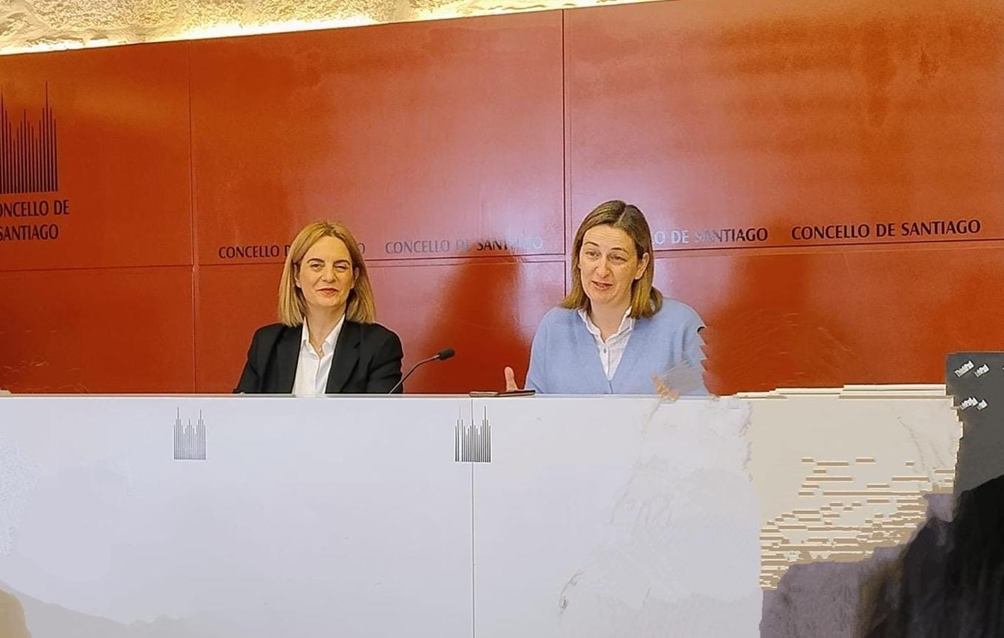

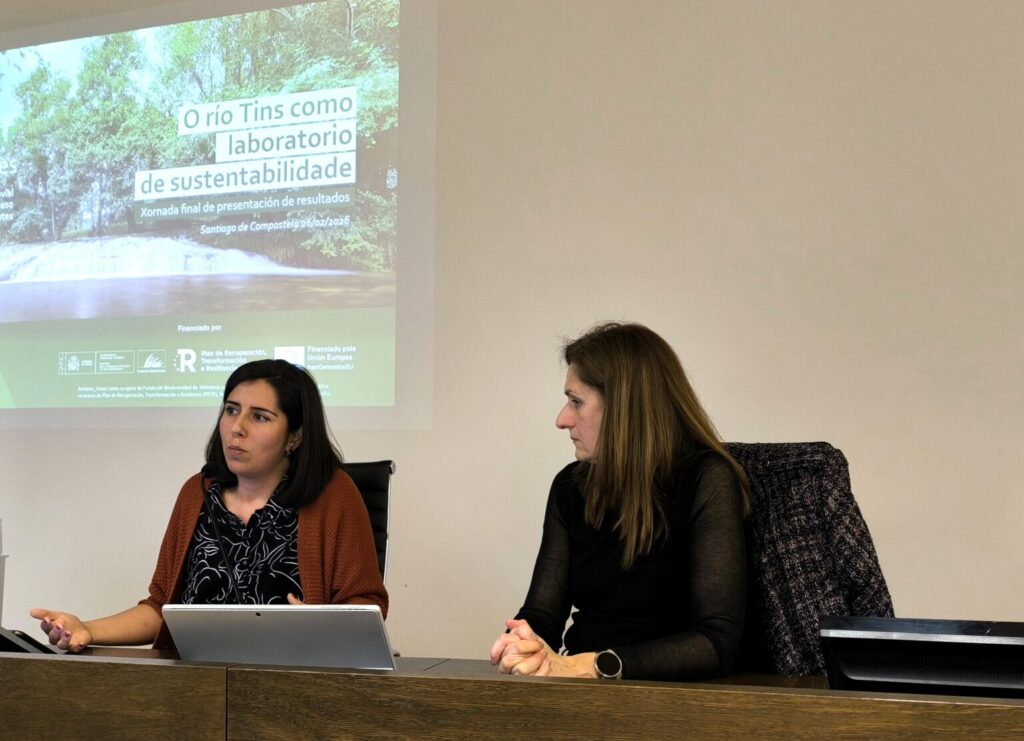
The renaturalización river, the improvement of the riparian forest and the promotion of the biodiversity of the river Tins to its passage through the urban core. With these objectives was born Renatur_Outes, a project in which he attended the USC through the Institute of Studies and Development of Galicia (IDEGA) and who presented this Thursday at the Faculty of Biology the results of an intervention that has managed to restore 2 km from cauce and mobilize the more than 600 people voluntary.
Science, public management and environmental education gave the hand to move forward in the recovery of this ecosystem river to its passage by the city council of Outes. The conference was inaugurated byInés Gusman, director of the Centre for Studies Regional (CEER), and by Ángeles Pine, a member of the group BEFORE and coordinator of the project at the University of Santiago; Miguel Serrano, of the department of Botany of the USC; Jonatan Rodríguez Parra, in the area of ecology of the USC; Carmen Fabregat, of the University of a Coruña (UDC); Luis González, of the University of Vigo (UVigo); and Portuguese-speaking countries) Evans, of the Foundation Montescola.
Over the three years of the intervention lográronse restore more than 20.000 m2 of green areas and more than 4 km of the river clean. Generated 300 m2 of islands of biodiversity and were involved more than 800 people in the processes of governance and social participation. Ángeles Pine, in turn, stressed the Declaration of the Rights of the river Tins held on march 1, 2024 that has consolidated as the first river with the rights of Spain. “The results of the project are physical, but the active participation of the local community is one of the most important achievements. The residents associations, foundations working in the territory and the students were key in these actions to raise awareness and recovery of the river”, he explains.
In the journey presented the advances in biodiversity and ecology and have analysed the various actions carried out for the improvement of the connectivity of the bed of the river, the recovery of the riparian forest and the control of invasive species like the different acacias present (Acacia dealbata and Acacia melanoxylon), the Tradescantia fluminensis or the plants of the genus Crocosmia. These actions have allowed to reduce the pressure of the invasive and promote the regeneration of the native vegetation of the riparian.
Renatur_Outes was coordinated by the Centre of Euroregional Studies (Foundation CEER) and led by the City of Outes, and counted with the participation of researchers of the three public universities of galicia, as well as Montescola. From the USC, the IDEGA collaborated in the preliminary works about the risks of flooding in the study area of the project. The initiative had the support of the Fundación Biodiversidad of the Ministry for la Transición Ecológica y el Challenging Demographic (MITECO) in the framework of the Plan of Recovery, Transformation y Resilencia (PRTR), funded by the European Union – Next GenerationEU.